If you have ever driven through Dunthorpe and felt that it doesn’t read like a typical Portland neighborhood, you are noticing something real. This pocket of 97219 has a distinct estate character shaped by large lots, mature trees, winding roads, and homes that sit carefully within the land rather than crowding it. If you are trying to understand what makes Dunthorpe feel so different, this guide will help you see the planning, landscape, and architectural patterns behind that identity. Let’s dive in.
Dunthorpe Feels Like an Estate District
Dunthorpe is best understood as an estate neighborhood rather than a conventional subdivision. Multnomah County planning materials describe it as a built-out area of large, older single-family homes on large lots, with zoning that is mostly R20 and some R10. The same materials also note that there is no commercial or industrial land here, which reinforces its quiet residential feel.
That planning framework matters because it shapes how the neighborhood looks and functions today. Portland’s base-zone standards define R20 as a 20,000-square-foot single-dwelling zone, which helps explain the generous lot pattern and the spacing between homes. In practical terms, Dunthorpe’s form is rooted in land, scale, and privacy rather than density.
Estate Origins Still Show Today
Dunthorpe’s identity did not happen by accident. Its development traces back to the Ladd Estate Company, with the first Dunthorpe plat filed by William M. Ladd in 1916. Historic documentation describes upper and lower Dunthorpe tracts that were developed for residential lots and country estates.
By the early 1920s, the area was promoted as scenic country living with urban conveniences. That message attracted Portland’s founding families and business leaders, many of whom built substantial homes on large tracts of land. The result is a neighborhood whose original logic was never about fitting in as many houses as possible, but about creating a residential district of country estates and manor houses.
That early pattern still matters. Even as some properties were later subdivided, the neighborhood retained its estate-scale foundation. You can still see that legacy in the parcel sizes, the setbacks, and the way homes relate to gardens, trees, and topography.
Large Lots Shape the Experience
One of the clearest things that defines Dunthorpe is its lot pattern. The area is largely built out, but it remains low-density and single-family in character. Homes tend to sit on generous parcels that give the neighborhood visual breathing room.
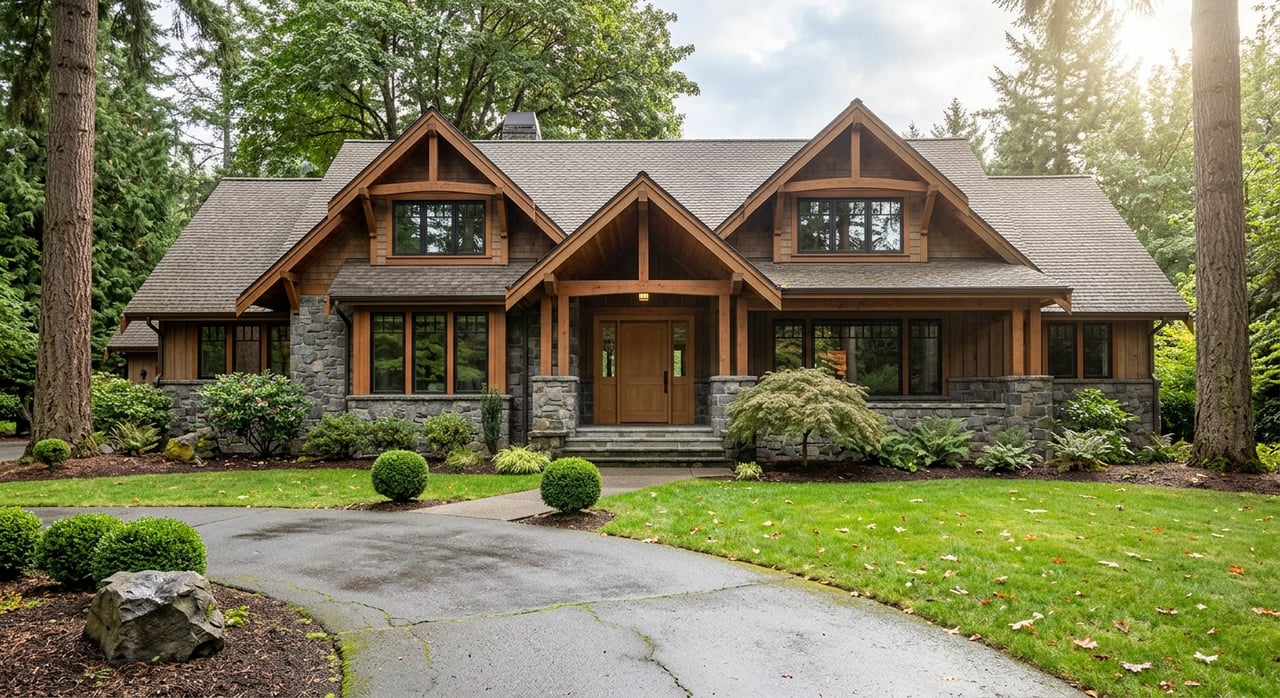
This spacing changes how the neighborhood feels from the street. Instead of a tight sequence of homes and driveways, you often experience long frontages, layered landscaping, and houses partially screened by mature trees. In Dunthorpe, open space on private lots is part of the neighborhood character, not just a bonus feature.
Large lots also support a broader estate vocabulary. Lawns, garden rooms, terraces, wooded edges, and long approach drives all feel natural here because the land can accommodate them. In many parts of Dunthorpe, the setting is as memorable as the home itself.
Trees, Slopes, and Ravines Matter
Landscape is not just scenery in Dunthorpe. County natural-resources analysis describes the area as having large lots and Douglas fir forests that create a rural atmosphere near downtown Portland. It also points to winding roads, ravines, and river cliffs as features that add visual variety.
That combination is a major reason the neighborhood feels secluded and layered. The land rises and falls, views open and close, and homes are often revealed gradually rather than all at once. This site-driven experience gives Dunthorpe a more private, estate-like quality than a flat, gridded neighborhood would offer.
Natural buffers also play a role. Planning analysis notes that these landscape features help separate Dunthorpe from adjacent uses and reinforce its country-like character. In other words, the mature canopy and terrain are not just beautiful. They actively shape the neighborhood’s identity.
The Street Pattern Feels Quiet and Local
Dunthorpe does not have the rhythm of a traditional city grid. County planning materials note steep slopes, discontinuous street connections, and few pedestrian or bicycle facilities. The road network functions more like a collection of local access roads than a connected urban street pattern.
That affects daily experience in a noticeable way. Streets feel quieter, more winding, and more responsive to the land. The neighborhood reads as residential first, with movement shaped by topography and private homesites rather than by through-traffic or commercial activity.
This is also why retail is not central to the Dunthorpe story. The area is primarily residential, and county materials explicitly describe it as having no commercial or industrial land. Its character comes from homes, landscape, and setting, not from mixed-use activity.
Architecture Follows the Land
Dunthorpe’s architecture is notable not because every house looks the same, but because many homes share an estate scale and careful siting. Historic examples include the Henry L. Corbett residence, designed in a Colonial Revival or farmhouse-colonial style, and the Whidden-Kerr House and Garden, described as Prairie style with Colonial Revival influences. Both are defined not only by their architecture, but also by their substantial grounds and views.
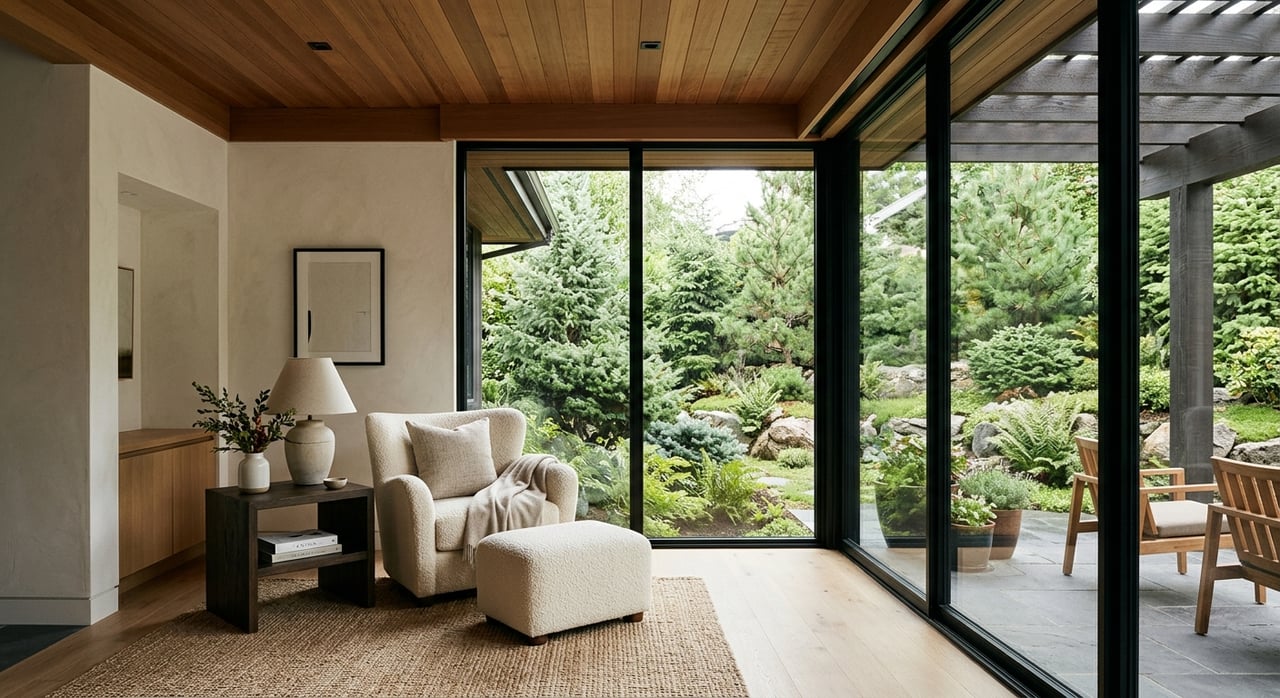
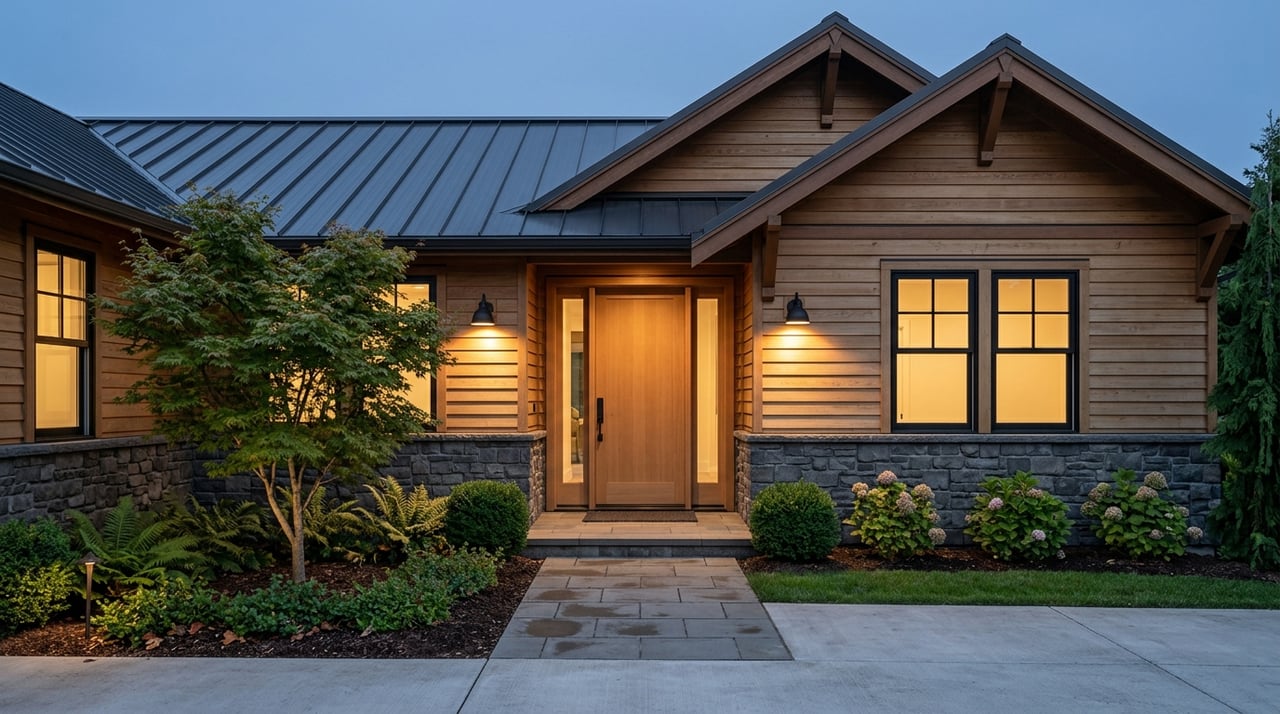
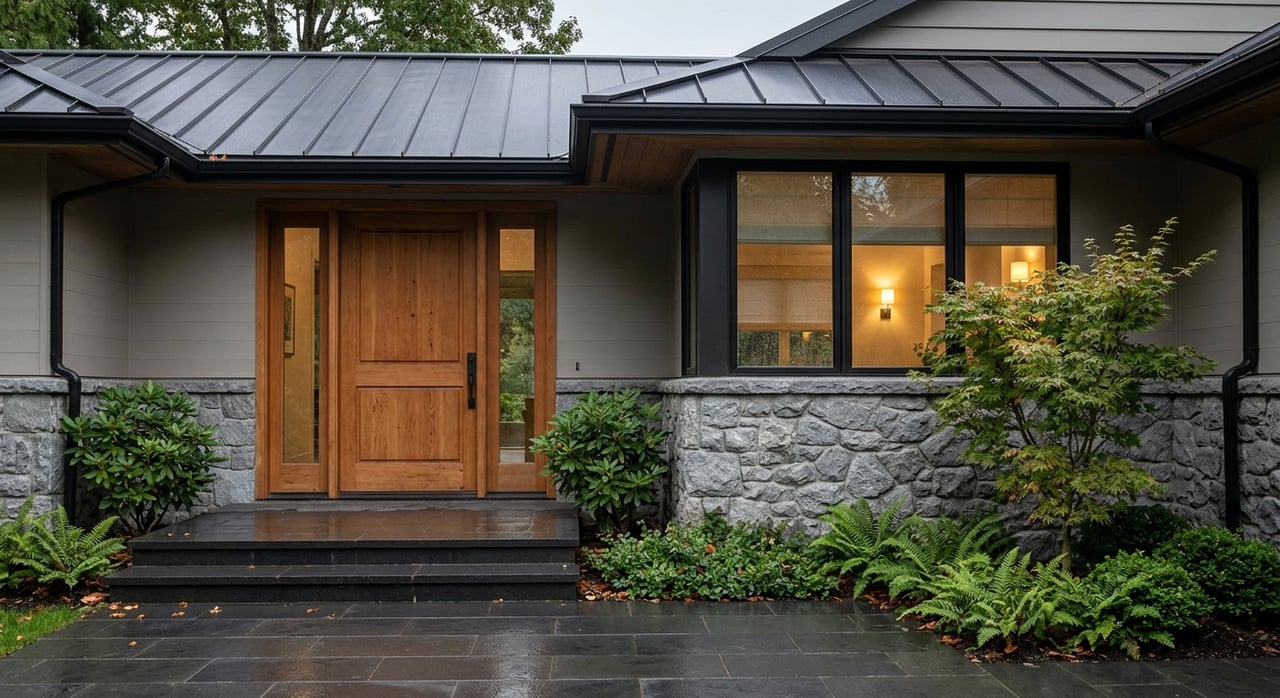
That relationship between house and site is one of the neighborhood’s strongest themes. In Dunthorpe, architecture often feels composed with the landscape. Homes are positioned to take advantage of bluffs, tree cover, topography, and outdoor space.
Later decades added variety without losing that larger pattern. Roscoe Hemenway designed more than a dozen Colonial Revival homes in Dunthorpe in the 1940s and 1950s. Van Evera Bailey’s 1959 Dunthorpe house used stilt-type construction to respond to a steep hillside and reflected Northwest Regional design principles suited to the wet climate and wooded terrain.
Taken together, these examples suggest that Dunthorpe’s built character is less about one fixed style and more about site-sensitive design. Colonial Revival, Prairie influences, and later regional modernism can all belong here when they respond thoughtfully to the land and maintain estate-scale presence.
The River Shapes the Neighborhood
The Willamette River is central to Dunthorpe’s identity. County analysis says the river forms the eastern boundary and offers boating, fishing, wildlife viewing, and hiking opportunities, though public access is limited. That edge gives the neighborhood an unmistakable sense of openness and natural definition.
Planning context reinforces that relationship. Portland’s River Plan South Reach, which includes the unincorporated Dunthorpe area, treats the corridor as a unique environmental asset and emphasizes habitat, parks, trails, scenic resources, and river-edge protections. That helps explain why the riverfront tends to feel low-intensity and visually protected.
In practical terms, the river contributes more than views. It influences the neighborhood’s mood, its open-space character, and the sense that Dunthorpe is shaped by environmental setting as much as by architecture.
Nearby Institutions Add Context
A few nearby places help define daily life around Dunthorpe without changing its residential identity. Lewis & Clark notes that its campus is adjacent to the Collinsview and Dunthorpe neighborhoods, and its trail network links the campus to the Willamette River and Tryon Creek State Park. The college also asks drivers not to cut through the neighborhood, which reflects the local preference for quiet residential streets.
Tryon Creek State Natural Area is another important part of the setting. Oregon State Parks describes it as Oregon’s only state park within a major metropolitan area, with 658 acres and trails for hiking, horseback riding, and biking. Its proximity strengthens the sense that Dunthorpe is connected to significant green space, not just private landscaping.
Elk Rock Garden also reinforces the area’s estate history. It began as an estate landscape on the riverfront, with uses that included food production, recreation, socializing, and ornamental gardening. That layering of land, design, and domestic life is very much in keeping with how Dunthorpe developed.
What Buyers and Sellers Should Notice
If you are buying or selling in Dunthorpe, it helps to understand that the neighborhood’s value is tied to more than square footage alone. Buyers are often responding to the full composition of the property, including lot size, privacy, tree canopy, topography, siting, and how the home engages with its landscape. In an estate neighborhood, those elements are part of the real offering.
For sellers, that means presentation should capture both architecture and setting. Mature grounds, outlooks, approach, natural light, and the feeling of privacy all help tell the property’s story. In a place like Dunthorpe, marketing is strongest when it reflects the relationship between home and land with care and precision.
For buyers, it is worth looking closely at how each property sits on its site. Two homes with similar size may offer very different experiences depending on slope, tree cover, orientation, and the way the grounds are organized. In Dunthorpe, those details often define the lifestyle as much as the house itself.
Why Dunthorpe Stands Apart
What defines Dunthorpe’s estate neighborhood character is the way its history, planning, landscape, and architecture all point in the same direction. It began as a district of country estates, and that original idea still shows in the lot sizes, wooded setting, winding roads, and carefully sited homes. Even with architectural variety, the neighborhood remains cohesive because the land continues to lead.
That is what makes Dunthorpe feel so distinctive within 97219. It is quiet, residential, and shaped by river bluffs, ravines, mature trees, and estate-scale parcels rather than by commercial corridors or dense subdivision patterns. If you are drawn to homes where setting is inseparable from design, Dunthorpe offers one of the Portland area’s clearest examples.
If you are considering buying or selling in Dunthorpe, Spurlock & Williams Real Estate brings a thoughtful, concierge-level approach to estate properties, with neighborhood insight, refined marketing, and hands-on guidance from start to finish.
FAQs
What makes Dunthorpe different from other 97219 neighborhoods?
- Dunthorpe stands out for its large lots, low-density single-family pattern, wooded landscape, winding roads, and estate-style history rather than commercial or mixed-use activity.
What does estate neighborhood character mean in Dunthorpe?
- In Dunthorpe, estate character refers to the combination of country-estate origins, generous parcel sizes, mature landscaping, site-sensitive homes, and a residential setting shaped by topography and river adjacency.
Is Dunthorpe a typical Portland neighborhood?
- No. Planning materials describe it as an unincorporated urban pocket with a primarily residential, large-lot pattern that feels more like a planned estate district than a conventional city neighborhood.
How does the Willamette River affect Dunthorpe’s character?
- The river forms Dunthorpe’s eastern edge and contributes views, open space, scenic identity, and a protected river-corridor feel, even though public access is limited.
What architectural styles are common in Dunthorpe?
- Dunthorpe includes historic revival homes, including Colonial Revival examples, along with later Northwest Regional design, but the stronger common theme is estate scale and careful siting within the landscape.
Why do lot size and topography matter in Dunthorpe real estate?
- Large lots, slopes, ravines, and mature tree cover shape privacy, views, outdoor space, and how a home sits on the land, all of which are important parts of the neighborhood’s appeal.